


Listen to this article
Audio version — How to Select an AODD PumpSelecting the right AODD pump for your application requires careful consideration of several key parameters. Getting the selection right ensures long pump life, reliable performance, and compatibility with your fluid. Here are the 6 factors to consider.
One of the most important factors is the type, composition, and nature of the fluid — to avoid corrosion of wetted parts and prevent wear and tear of the pump. Key questions to ask:
Nature of Fluid — 6 Categories:
Examples: Sulphuric acid, nitric acid, sodium hydroxide. These fluids destroy and damage materials on contact — careful selection of wetted parts and diaphragm material is essential.
Examples: Paints, inks, ceramic slurry. Contain solid particles that scrape and wear contact materials. Recommended: PTFE diaphragm + SS316 wetted parts.
Examples: Lead, mercury compounds. Diaphragm pumps are seal-less and have a leak-free design — making them ideal for safely transferring toxic or poisonous liquids.
Examples: Acetone, benzene, petroleum. AODD pumps are air-driven and intrinsically safe. Note: some liquids generate static charge — the pump must be fully grounded.
Examples: Tomato ketchup, emulsions, curd, paste. Churning changes product characteristics. AODD pumps run at low speed — ideal for such liquids. Recommend running at slower than normal speed.
Examples: Diesel, hydrocarbons. Ensure the pump runs at low speed and suction lift is limited — otherwise the AODD pump may not deliver the required flow.
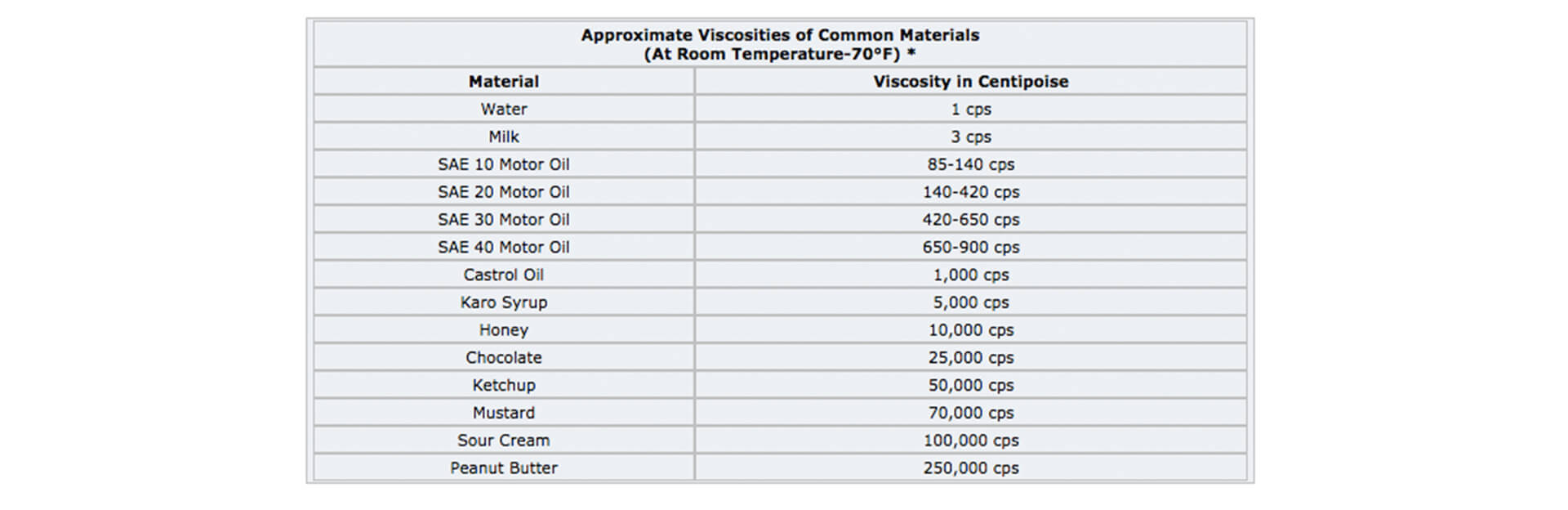
Viscosity is the resistance to flow — in other words, the "stickiness" of the fluid. It is important to determine how viscous the liquid is. Depending on the viscosity and frictional losses in the pipeline, the appropriate pump size needs to be determined.
Determining the pressure conditions at the suction (inlet) and discharge (outlet) will help select the appropriate AODD pump size.
a) Suction Pressure: The pressure at the inlet of the pump. AODD pumps can work on both flooded suction and suction lift conditions as they are self-priming. It is also important to check if high suction back-pressure is present, as this may hamper the lifting of the suction valves and affect pump performance.
b) Discharge Pressure: The head requirement at the discharge of the pump — at what height the fluid must be delivered, along with frictional losses in the pipeline. The discharge pressure directly determines the required inlet air pressure.
To select the size of the AODD pump, the required flow rate is the primary consideration. For higher flow rates, select a larger pump with larger port sizes (suction and discharge connections) — and vice versa.
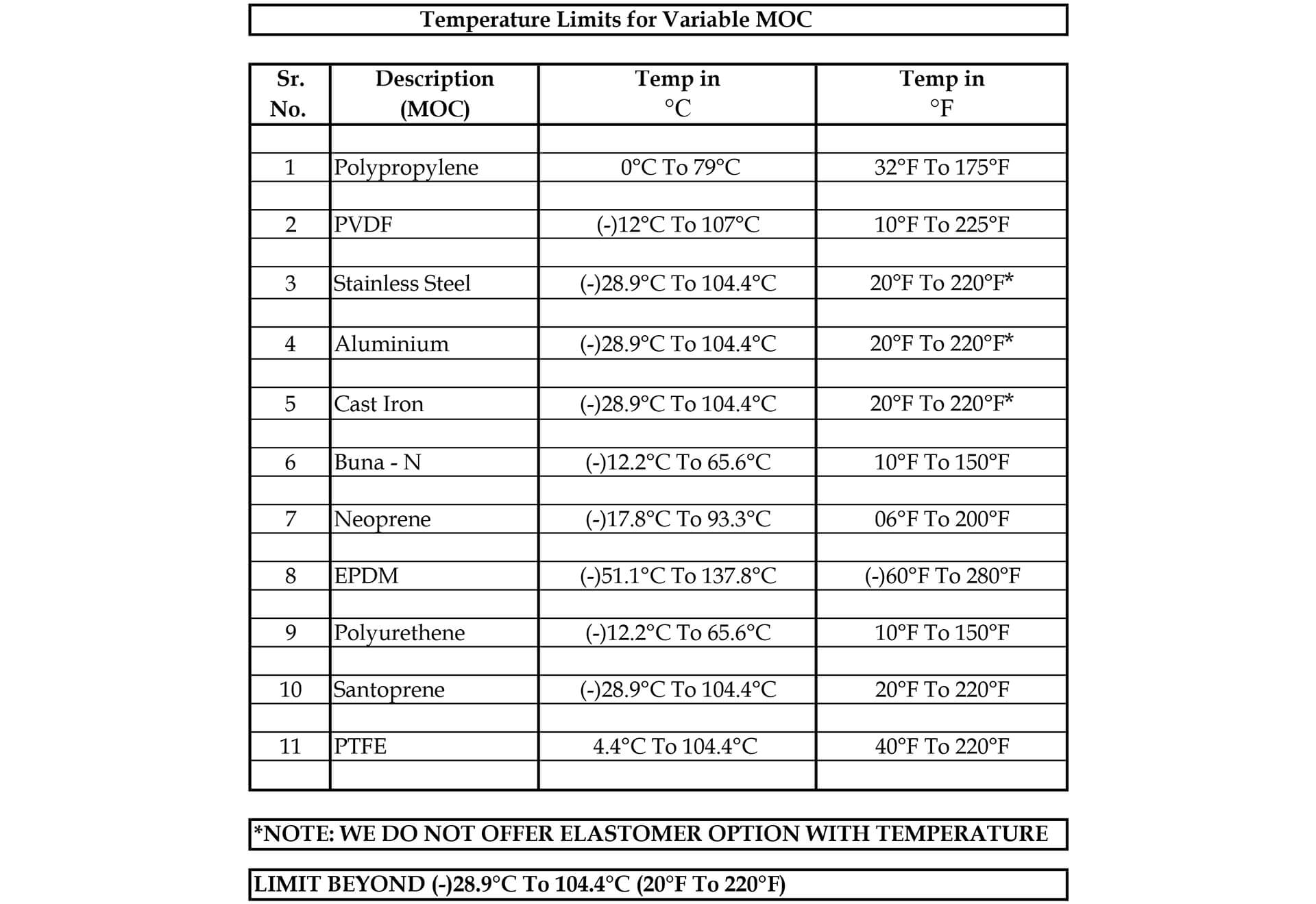
Pump materials have temperature limitations. It is essential to know both the operating temperature of the fluid and ambient conditions to ensure that the diaphragm pump material is best suited for the application.
AODD pumps can be used for both continuous and intermittent applications. They are mainly used for unloading and transfer purposes.
Air pumps are simple to operate and can also be mounted on a movable trolley — making them easily deployable at the required location whenever needed, with only a compressed air connection required.
Share your fluid name, required flow rate, discharge pressure, and temperature with our engineers — we will recommend the correct pump model, body material, and diaphragm material free of charge.
Get Free Pump Selection Help Call +91 9819395995