


Listen to this article
Audio version — Types of Barrel Pumps & Their ApplicationsBarrel pumps are widely used across Indian industries for transferring liquids from drums, barrels, and containers. They are especially useful in situations where fixed pumping systems are not required or where flexibility and safety are important. From chemicals and oils to food-grade liquids and adhesives, barrel pumps provide a practical and controlled way to handle fluids directly from drums. However, not all barrel pumps work the same way — each type is designed for specific fluids, operating conditions, and safety requirements.
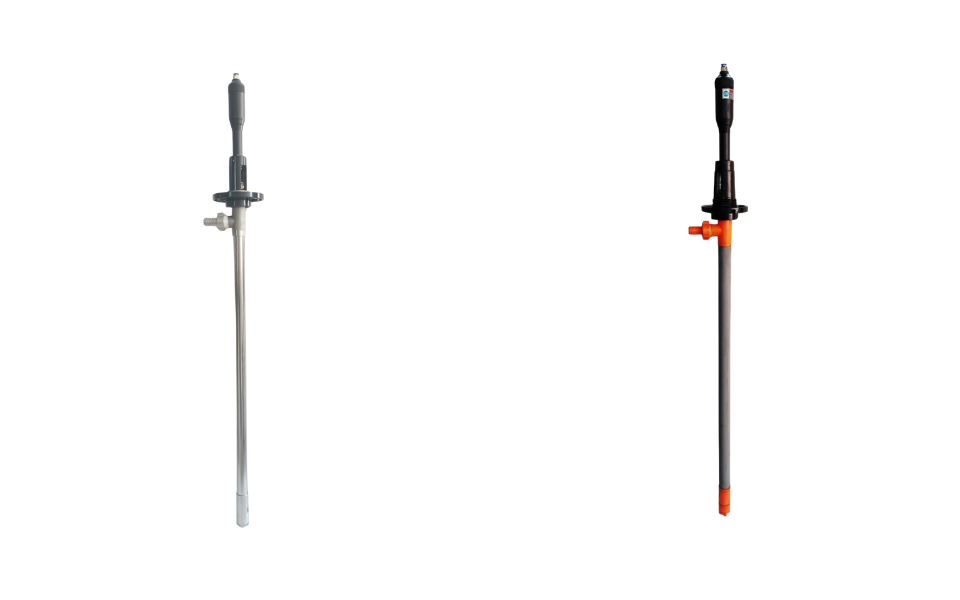
Pneumatic barrel pumps operate using compressed air and are commonly available as motorised pneumatic barrel pumps (PP & SS) and simple pneumatic barrel pumps (SS). These pumps are widely used where electrical power is restricted or where safety is a priority.
A pneumatic barrel pump is connected to an external air compressor that supplies pressurised air to an air motor inside the pump. The compressed air is converted into mechanical motion, which drives the pumping mechanism — creating suction, drawing liquid from the drum, and pushing it through a discharge hose into another container.
Pneumatic barrel pumps are typically manufactured using SS-316 stainless steel for corrosion resistance and mechanical strength, and Polypropylene (PP) for chemical compatibility.
Air operated piston type barrel pumps are designed for applications that require controlled flow and higher discharge pressure, especially when handling thick or viscous liquids.
These pumps work on a reciprocating piston principle powered by compressed air. When air pressure in the range of 2.5–9 kg/cm² is applied, the piston moves up and down. The upward stroke creates suction drawing liquid into the pump, while the downward stroke discharges the liquid. This continuous action provides steady, controllable flow without electricity.
Generally manufactured in SS-316, making them suitable for corrosive, hazardous, and viscous liquids.
.png)
Rotary hand barrel pumps are manually operated pumps used for basic and low-volume fluid transfer. They do not require electricity or compressed air.
Rotary hand barrel pumps work on a positive displacement principle. When the handle is turned, an internal mechanism (gear, vane, or rotor) rotates inside the pump chamber. This rotation creates a vacuum that draws liquid from the barrel. The trapped liquid is then pushed toward the discharge outlet, ensuring continuous flow as long as the handle is operated.
Available in Polypropylene (PP) and Stainless Steel (SS) constructions.
.png)
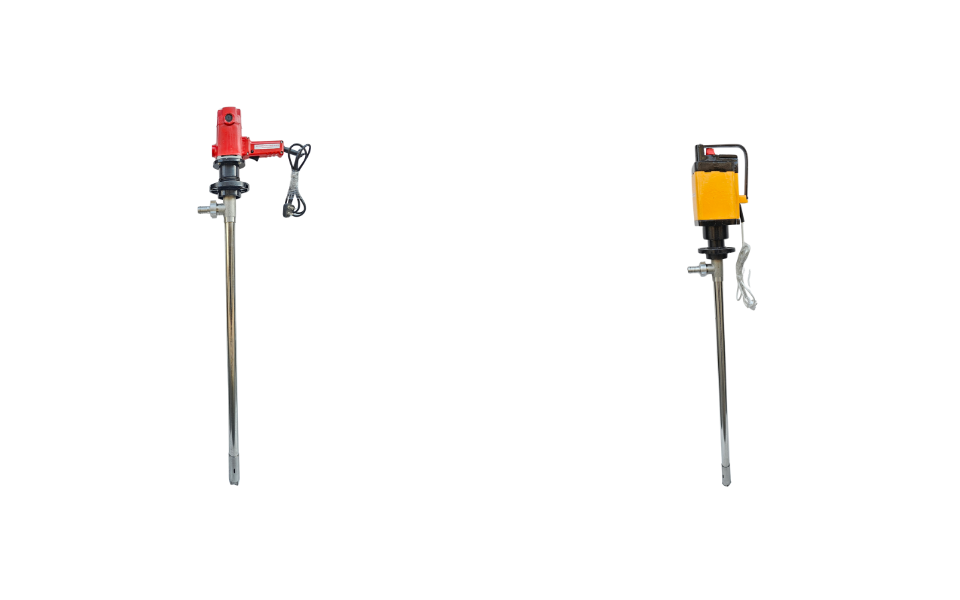
Electric barrel pumps are powered by electric motors and are commonly used for clean or low-viscosity fluids in controlled environments.
Electric barrel pumps use an AC or DC motor to drive an impeller or rotor mounted inside a pump tube. When the motor is switched on, it creates suction that draws liquid up through the tube and discharges it through a hose or nozzle. Many electric barrel pumps include flow control valves and automatic shut-off to prevent overflow.
Manufactured using SS-316 stainless steel for corrosion resistance and Polypropylene (PP) for chemical compatibility.
| Barrel Pump Type | Power Source | Materials | Suitable Fluids | Typical Applications |
|---|---|---|---|---|
| Pneumatic Barrel Pump (Motorised / Simple) | Compressed Air | PP / SS | Corrosive, flammable, low to medium viscosity | Chemical plants, paints, solvents, hazardous areas |
| Air Operated Piston Type | Compressed Air | SS | High-viscosity, hazardous, corrosive liquids | Adhesives, resins, oils, dosing applications |
| Rotary Hand Barrel Pump | Manual Operation | PP / SS | Oils, fuels, non-corrosive liquids | Workshops, maintenance, remote locations |
| Electric Barrel Pump | Electric Motor (AC/DC) | PP / SS | Clean, low-viscosity, flammable & non-flammable | Food, FMCG, laboratories, controlled environments |
Barrel pumps play a critical role in safe and efficient fluid handling across industries. Whether it is a pneumatic barrel pump for chemicals, an air operated piston type barrel pump for viscous fluids, a rotary hand barrel pump for basic transfer, or an electric barrel pump for clean liquids — each type serves a specific purpose.
Selecting the correct barrel pump ensures smoother operations, reduced downtime, and safer handling of industrial liquids — especially in demanding Indian plant conditions.
Our engineers at Antlia Engineering Works, Mumbai will help you choose the right barrel pump for your specific fluid and application — free consultation.
Get a Free Consultation Call +91 9819395995The four main types of barrel pumps are: Pneumatic Barrel Pumps (motorised and simple), Air Operated Piston Type Barrel Pumps, Rotary Hand Barrel Pumps, and Electric Barrel Pumps (flammable and non-flammable variants).
Pneumatic barrel pumps are best for flammable liquids as they do not use electricity, eliminating the risk of sparks. Air operated piston type barrel pumps are also safe for hazardous and flammable fluids.
Pneumatic barrel pumps use compressed air and are safer for flammable and corrosive fluids. Electric barrel pumps use an AC or DC motor and are better for clean, low-viscosity fluids in controlled environments where a stable power supply is available.
Air operated piston type barrel pumps are specifically designed for high-viscosity fluids such as adhesives, resins, grease, and thick oils. They work on a reciprocating piston principle and provide controlled flow at higher discharge pressure.