


Listen to this article
Audio version — DO's and DON'Ts of Barrel PumpsBarrel pumps are widely used across industries for transferring liquids from drums, barrels, tanks, and containers safely and efficiently. Many operational problems are not caused by the pump itself, but by incorrect usage, poor maintenance, or improper fluid compatibility. Understanding the right do's and don'ts helps improve efficiency while reducing downtime and maintenance costs.
A barrel pump, also known as a drum pump, is designed to transfer fluids directly from barrels and containers. These pumps are commonly used in:
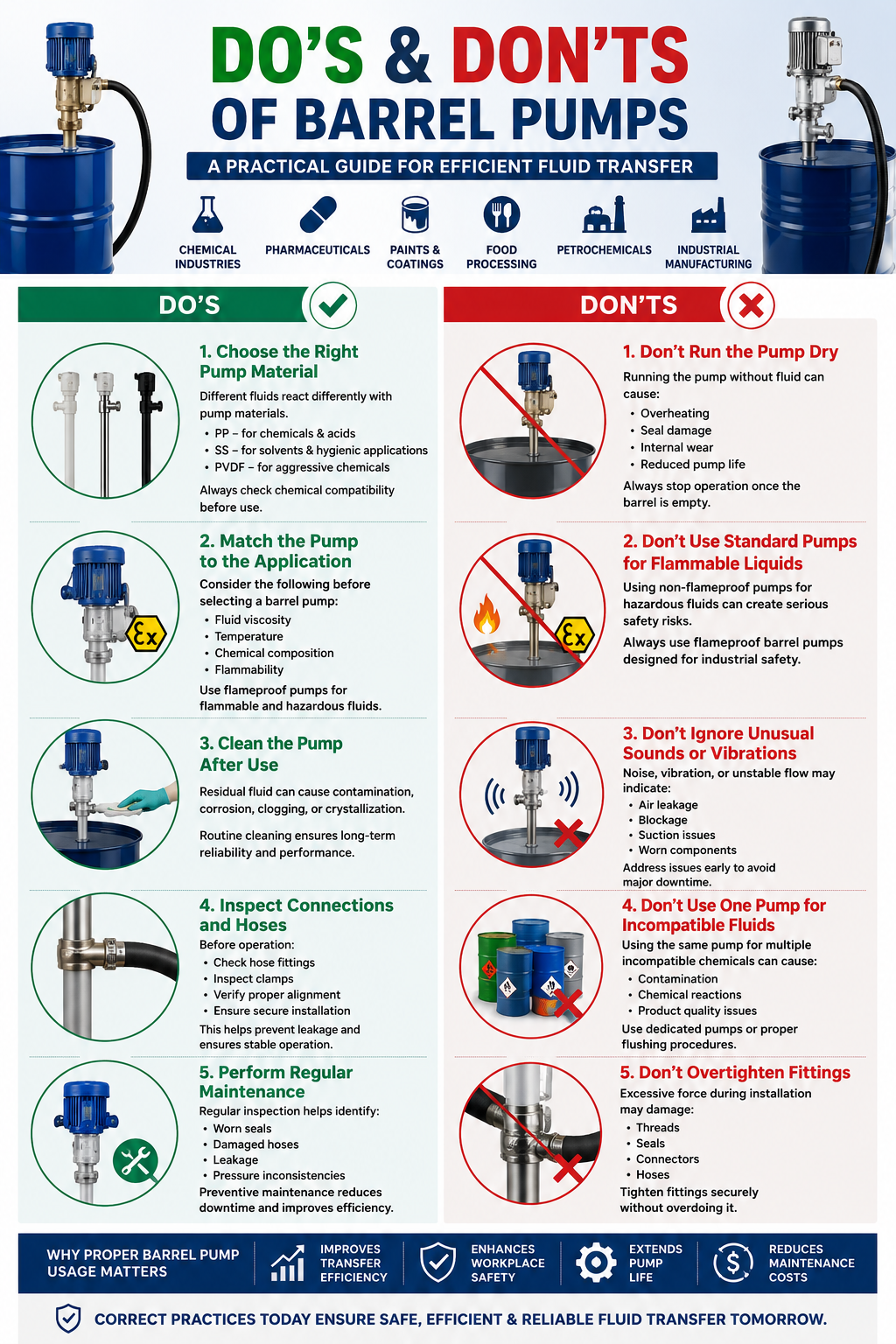
Depending on the application, barrel pumps are available in PP, SS, aluminium, PVDF, and flameproof variants.
Different fluids react differently with pump materials. Using the correct material improves safety and pump life.
Before selecting a barrel pump, consider fluid viscosity, temperature, chemical composition, and flammability. Flammable liquids should always be handled using flameproof barrel pumps designed for hazardous environments.
Residual fluid left inside the pump may lead to contamination, corrosion, clogging, and crystallization. Routine cleaning improves operational reliability and prevents long-term damage.
Before operation, check hose fittings, inspect clamps, verify proper alignment, and ensure secure installation. Loose connections can create leakage and unstable flow conditions.
Routine inspection helps identify worn seals, damaged hoses, leakage, and pressure inconsistencies. Preventive maintenance improves pump efficiency and reduces unexpected downtime.
Dry running is one of the most common causes of barrel pump damage. Running the pump without fluid may cause overheating, seal damage, internal wear, and reduced pump life.
Using a non-flameproof pump for hazardous fluids can create serious safety risks. For solvents and combustible liquids, always use flameproof barrel pumps designed for industrial safety.
Noise, vibration, or unstable flow may indicate air leakage, blockage, suction issues, or worn components. Ignoring early warning signs often leads to larger operational problems.
Using the same pump for multiple incompatible chemicals without proper cleaning may result in contamination, chemical reactions, and product quality issues. Dedicated pumps or proper flushing procedures are recommended.
Excessive force during installation may damage threads, seals, connectors, and hoses. Secure fittings properly without overtightening.
Correct barrel pump operation improves transfer efficiency, workplace safety, pump life, process consistency, and maintenance costs. It also helps reduce product loss, leakage, downtime, and contamination risks.
In industries where fluid handling directly affects production quality, proper barrel pump practices play a critical role in maintaining reliable operations.
Barrel pumps are simple and highly effective when used correctly. However, incorrect installation, poor maintenance, or unsuitable pump selection can create avoidable operational issues.
Understanding the right do's and don'ts helps improve safety, efficiency, reliability, and long-term performance. For any guidance on selecting the correct barrel pump for your specific application, contact Antlia Engineering Works.
Our engineers at Antlia Engineering Works, Mumbai will help you choose the right pump for your specific fluid and application — free consultation.
Get a Free Consultation Call +91 9819395995Running a barrel pump dry causes overheating, seal damage, internal wear, and reduced pump life. Always stop operation once the barrel becomes empty to prevent dry running.
No. Using a non-flameproof pump for flammable or hazardous fluids creates serious safety risks. Always use flameproof barrel pumps specifically designed for industrial safety when handling solvents or combustible liquids.
A barrel pump should be cleaned after every use. Residual fluid left inside can cause contamination, corrosion, clogging, or crystallization. Routine cleaning improves operational reliability and prevents long-term damage.
PP pumps are commonly used for chemicals and acids. SS pumps are preferred for solvents and hygienic applications. PVDF pumps are suitable for aggressive chemicals. Always check chemical compatibility before selecting pump material.